
Description
Assembly & Design Core
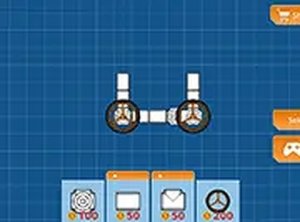
Players begin each mission in a workshop interface where they select from a range of chassis types, wheel sizes, and power units. The assembly process is hands-on: components snap together on a central frame, and the player must consider weight distribution and ground clearance. A rover with large wheels handles deep craters better, while a lower profile offers stability on slopes. The game does not prescribe a single correct build; instead, it encourages experimentation. If a design flips or gets stuck, the player can return to the workshop to swap parts and try a different configuration. This trial-and-error loop forms the heart of the experience, rewarding creative problem-solving over memorization.
Terrain Navigation & Physics
Once the rover is assembled, the driving phase begins. The Martian landscape is rendered as a series of procedurally arranged obstacles: sharp rocks, loose gravel patches, steep inclines, and deep fissures. The physics engine simulates realistic traction and momentum, so a top-heavy rover may tip on a sharp turn, while an underpowered engine might stall on a steep climb. Players control speed and steering using keyboard arrows or on-screen touch controls. Each level has a designated drop zone, and the rover must reach it without losing any attached cargo modules. The environment is static per level, allowing players to learn routes and adjust their driving line for better efficiency.
Progression & Unlock System
Completing a delivery awards in-game currency, which accumulates in a persistent wallet. The shop offers new parts that expand the design possibilities: reinforced frames for durability, all-terrain treads for grip, and high-torque motors for climbing. Parts are unlocked sequentially, so early missions use basic components, while later stages introduce advanced options like suspension arms and solar panels. This gradual unlock system ensures that the difficulty curve remains accessible. Players who struggle with a particular level can grind earlier missions to purchase better equipment, providing a non-linear path through the campaign.
Visual Style & Accessibility
The game adopts a clean, low-poly art style that keeps the interface uncluttered. The Martian surface uses warm reds and browns, with subtle dust particle effects during driving. On-screen indicators show speed, part integrity, and remaining cargo. The game runs entirely in a web browser and supports both desktop and mobile viewports. Controls are responsive on touchscreens, with virtual buttons that do not obscure the play area. Full-screen mode is available for an immersive view. No download or installation is required, making it easy to start a session on any device with an internet connection.
Player Comments
Sign in to comment
You must be logged in before posting a review or rating.
No account? Create one
No comments yet. Be the first to comment!